

Key Takeaways
- U.S. Market Rally: The S&P 500 marked its second week of gains, and the Nasdaq jumped over 3%, driven by strong tech earnings and trade optimism.
- Buffett Succession News: Warren Buffett’s plan to step down as Berkshire Hathaway CEO sparked discussion in Omaha, with optimism about the company’s future and local support.
- Bond Market Reaction: U.S. Treasury yields surged following robust jobs data. Munis rallied, while corporate bonds underperformed.
- Global Trade and Tensions: Progress in U.S.-India trade talks; Pakistan accuses India of cutting Chenab River water flow by 90%.
- Corporate Moves: Rivian stockpiles batteries to avoid tariffs. Spotify reaches record subscriber growth and revenue.
- Tech Disruption: Skype to shut down after 23 years, Meta faces FTC lawsuit, Amazon launches Kuiper satellites.

IPO’s in the week
- Digital Asset Acquisition (DAAQU) began trading on Nasdaq on April 29, 2025, raising $150 million through the sale of 15 million shares at $10.00 each. The SPAC is focused on ventures in the digital asset and blockchain space.
- Real Asset Acquisition (RAAQU) launched on Nasdaq the same day with 15 million shares priced at $10.00, also raising $150 million. The company targets investments in digital infrastructure backed by real estate.
- Yuanbao (YB), a Chinese fintech firm, made its Nasdaq debut on April 30, 2025, offering 2 million shares at $15.00 each.
- Berto Acquisition (TACOU) raised $250 million on April 30, 2025, by offering 25 million shares at $10.00 on Nasdaq. The SPAC plans to pursue a merger in the fintech or healthtech sectors.
- Lakeshore Acquisition III (LCCCU) went public on April 30, 2025, raising $60 million through an offering of 6 million shares at $10.00. It is focused on consumer and media-related investments.
- Copley Acquisition (COPLU) debuted on the NYSE on May 1, 2025, issuing 15 million shares at $10.00 to raise $150 million. The firm seeks acquisition targets in North American industrials.
- Republic Digital Acquisition (RDAGU) entered Nasdaq on May 1, 2025, raising $220 million from a 22 million share offering at $10.00. The SPAC focuses on blockchain platforms and Web3 technologies.
- Cantor Equity Partners II (CEPT) launched on Nasdaq on May 2, 2025, with a $200 million raise from 20 million shares at $10.00. The offering is backed by Cantor Fitzgerald and is eyeing deals in the finance sector.
- Cartesian Growth III (CGCTU) also debuted on May 2, 2025, raising $200 million via 20 million shares at $10.00 on Nasdaq. The SPAC is targeting global high-growth companies.
- Gores Holdings X (GTENU) went public on May 2, 2025, through a 26 million share offering at $10.00, raising $260 million. It is the latest in a series of SPACs from the Gores Group, with a flexible investment mandate.
- Smart Digital Group (SDM) was the only traditional operating company IPO of the week, listing 1.5 million shares at $4.00 on Nasdaq on May 2, 2025.

Markets this week
- U.S. Equities: Continued rally as tech earnings beat expectations. S&P 500 and Nasdaq both up strongly. Small and mid-caps rose for the fourth week.
- Buffett’s Legacy in Focus: Buffett’s succession sparked speculation but renewed faith in Berkshire’s stability and Omaha’s economic ties.
- Bonds: Yields spiked after strong payrolls data. Munis outperformed; corporates lagged.
- Global Markets: Europe’s STOXX 600 rose 3.44%, Japan’s Nikkei up 3.15%, while China lagged amid weak PMI data.
- Armistice Capital Locks Withdrawals: After sustained losses and redemptions, the hedge fund froze investor withdrawals for the year.
- Temu Halts U.S. Shipments: In response to tariff crackdowns, Temu paused direct shipments from China, reshaping e-commerce logistics.
- Rivian’s Battery Strategy: Rivian preemptively sourced tariff-free batteries to protect its EV production pipeline.
- Spotify’s Record Quarter: 5M new premium users and €4.2B in revenue reflect platform growth, despite slightly missing income forecasts.
- IBM’s Big Bet: Commits $150B to U.S. tech innovation over five years, with major investments in AI and quantum computing.
Economic Highlights
- Student loan collections resume: The Trump administration has resumed collections on defaulted student loans, targeting millions of borrowers with threats of wage and benefits garnishment; over five million are already in default—many since the pandemic—while millions more are at risk, facing renewed financial pressure amid a still-recovering job market.
- U.S. labor market showed mixed signals: Job openings dropped to a seven-month low, yet April’s payrolls beat expectations with 177,000 new jobs, keeping unemployment stable at 4.2%.
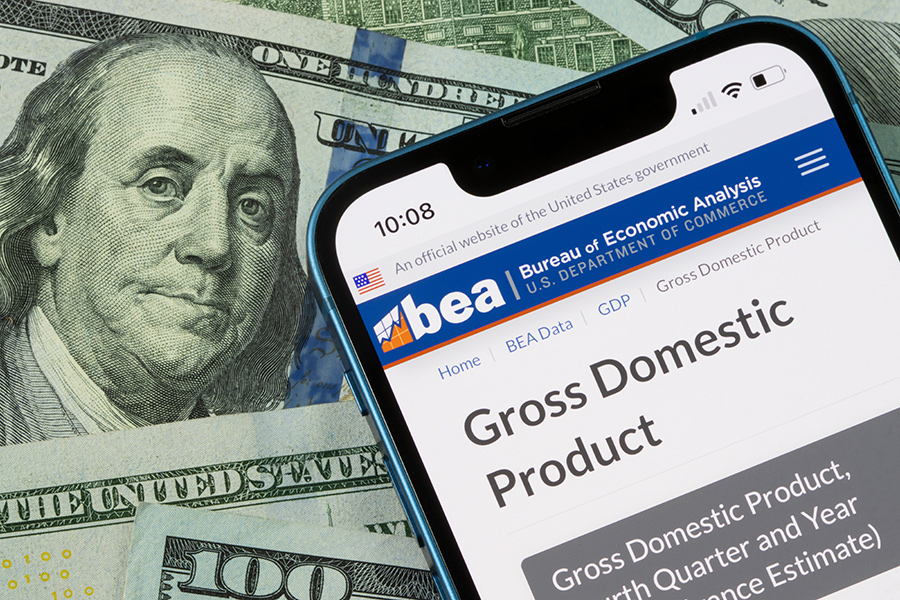
- U.S. GDP contracted 0.3% in Q1, the first decline since 2022, attributed to a surge in imports and a slowdown in consumer and government spending.
- PCE inflation was flat, while consumer spending rose 0.7%—a sign of resilience heading into Q2.
- Eurozone GDP grew 0.4%, doubling from the previous quarter. Spain and Italy led the way, and Germany and France returned to growth.
- Japan downgraded growth and inflation forecasts, citing weak manufacturing data and underwhelming retail sales.
- China’s PMI fell below 50, signaling contraction in manufacturing activity. Non-manufacturing also softened, reflecting the toll of elevated tariffs.
Politics Weekly
- Bill Ackman on Harvard’s tax status: Ackman said it would be fair for Harvard to lose its tax‑exempt status—though he doesn’t believe it will happen—and publicly criticized the university’s leadership, calling for senior fellow Penny Pritzker to step down; this comes after President Trump threatened to revoke Harvard’s exemption, a move Harvard President Alan Garber denounced as unprecedented.
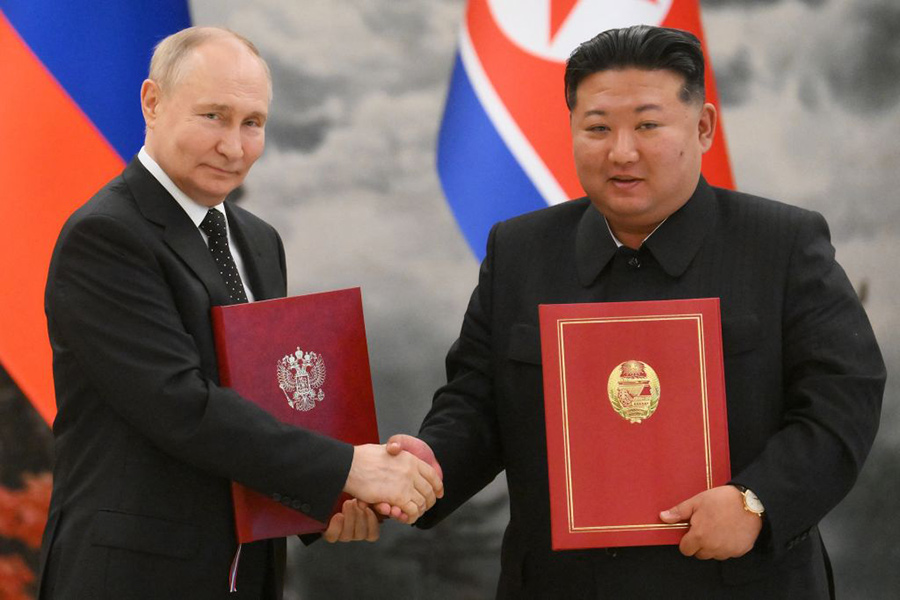
- North Korea sends workers to aid Russia: As part of their growing alliance, North Korea is now helping Russia ease its wartime labor shortage by sending thousands of workers—reportedly around 15,000—who are valued for their low pay and long hours. Despite UN sanctions banning such labor exports, Moscow and Pyongyang have openly disregarded the rules as Russia struggles with a shrinking workforce due to war casualties and emigration.
- Trump hints at potential trade deals: President Donald Trump suggested that his administration might strike trade deals with some countries this week, offering possible relief from higher U.S. import duties, but did not specify which countries.
- Trump defends Powell’s position: Despite ongoing criticism of Federal Reserve Chair Jerome Powell over interest rate cuts, President Donald Trump stated he has no plans to fire him, adding that he can replace Powell in the future. Trump continues to face backlash for his use of tariffs, but Powell’s term ends in May 2026.
- IRS Faces Staff Shortage: The IRS lost 31% of its auditors, with over 3,600 revenue agents leaving due to buyouts and layoffs linked to Elon Musk’s Department of Government Efficiency. The departures, including 18% of revenue officers and 10% of tax examiners, are expected to hinder the agency’s ability to target tax evasion.
- Pakistan Accuses India of Water Flow Disruption: Pakistan claims India has reduced the flow of water through the Chenab river by nearly 90%, impacting water supply for agriculture. The cut comes amid rising tensions following a deadly attack in Kashmir. If the flow remains restricted, Pakistan may have to reduce water supplies to farms by 20%.
- US-India Trade Talks: US Vice President JD Vance and Indian Prime Minister Narendra Modi held discussions in New Delhi, making significant progress on a bilateral trade deal aimed at avoiding additional US tariff hikes. The talks also covered defense, critical technologies, and energy cooperation. Both leaders emphasized dialogue and diplomacy for regional and global security, with hopes of creating new opportunities for workers, farmers, and entrepreneurs in both nations.
Technology Advancements this week
- FTC targets Meta over alleged monopoly: The Federal Trade Commission is pushing to break up Meta, claiming its acquisitions of Instagram and WhatsApp created an illegal monopoly. Meta counters that competition from TikTok has transformed the industry, shifting user behavior toward entertainment. Internal documents show Meta was concerned Instagram could cannibalize Facebook’s own growth.
- Skype to shut down after 23 years: Microsoft has confirmed that Skype will officially shut down on Monday, May 5, 2025, marking the end of the iconic video-calling service after more than two decades of global connectivity.
- TeleMessage hack exposes sensitive data: A hacker exploited a vulnerability in TeleMessage—used to archive modded versions of Signal, Telegram, and WhatsApp—exposing messages and contact details tied to U.S. government officials and major companies. Though cabinet members’ messages were not breached, the hack revealed unencrypted archived chats and back-end credentials, affecting entities like U.S. Customs and Border Protection, Coinbase, and Scotiabank.
- Trump open to delaying TikTok ban again: President Trump stated he’s willing to extend the TikTok ban deadline beyond June 19 if a sale to U.S. owners isn’t finalized, marking what would be the third delay in efforts to resolve national security concerns over the app’s Chinese ownership.
- Apple appeals App Store ruling after court rebuke: Apple has formally appealed a recent court decision forcing it to allow external payment links in U.S. apps, following sharp criticism from Judge Yvonne Gonzalez Rogers for defying a prior injunction in its case against Epic Games. The judge accused Apple of imposing obstructive requirements and referred one executive for possible criminal contempt.
- AI coding startup Anysphere raises $900M at $9B valuation: Backed by Thrive Capital, a16z, and Accel, Anysphere—the company behind AI coding tool Cursor—has secured $900 million in new funding, bringing its valuation to approximately $9 billion, according to The Financial Times.
- Epic Games expands webshops after court win over Apple: Following a major legal victory, Epic Games is launching webshops on its Epic Games Store, enabling developers to bypass Apple and Google’s app store fees. A judge recently slammed Apple for deliberately defying a 2021 order prohibiting restrictions on out-of-app purchases.
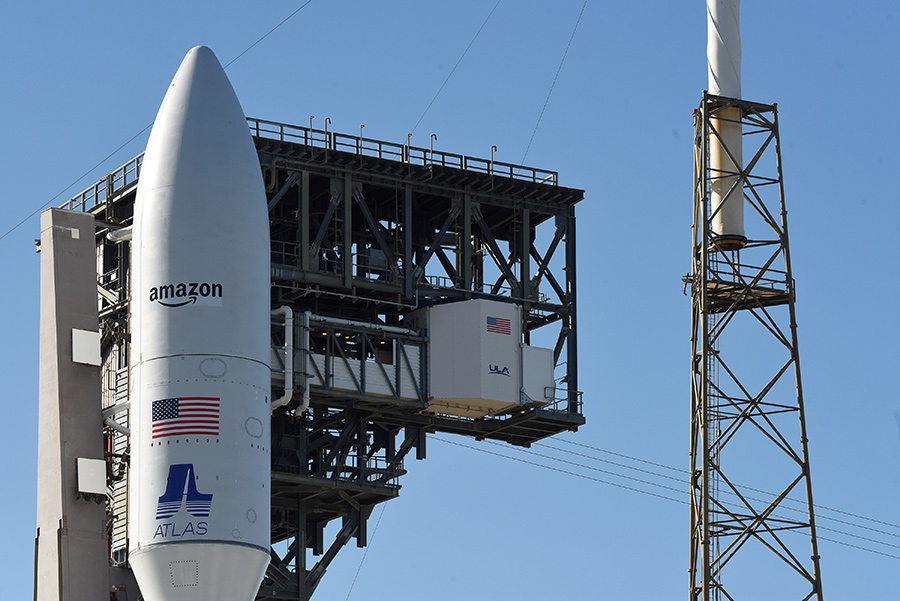
- Amazon launches first Kuiper satellites: Amazon successfully sent its first 27 Kuiper satellites into orbit via a ULA Atlas V rocket, marking the start of its plan to build a 3,226-satellite internet network to compete with Elon Musk’s Starlink, which already boasts 8,000 satellites and over 5 million users.
Don’t miss out on next week’s market insights and updates!
👉Keep the conversation going! Subscribe to our weekly newsletter for more insights, delivered straight to your inbox.