Analyst Highlights
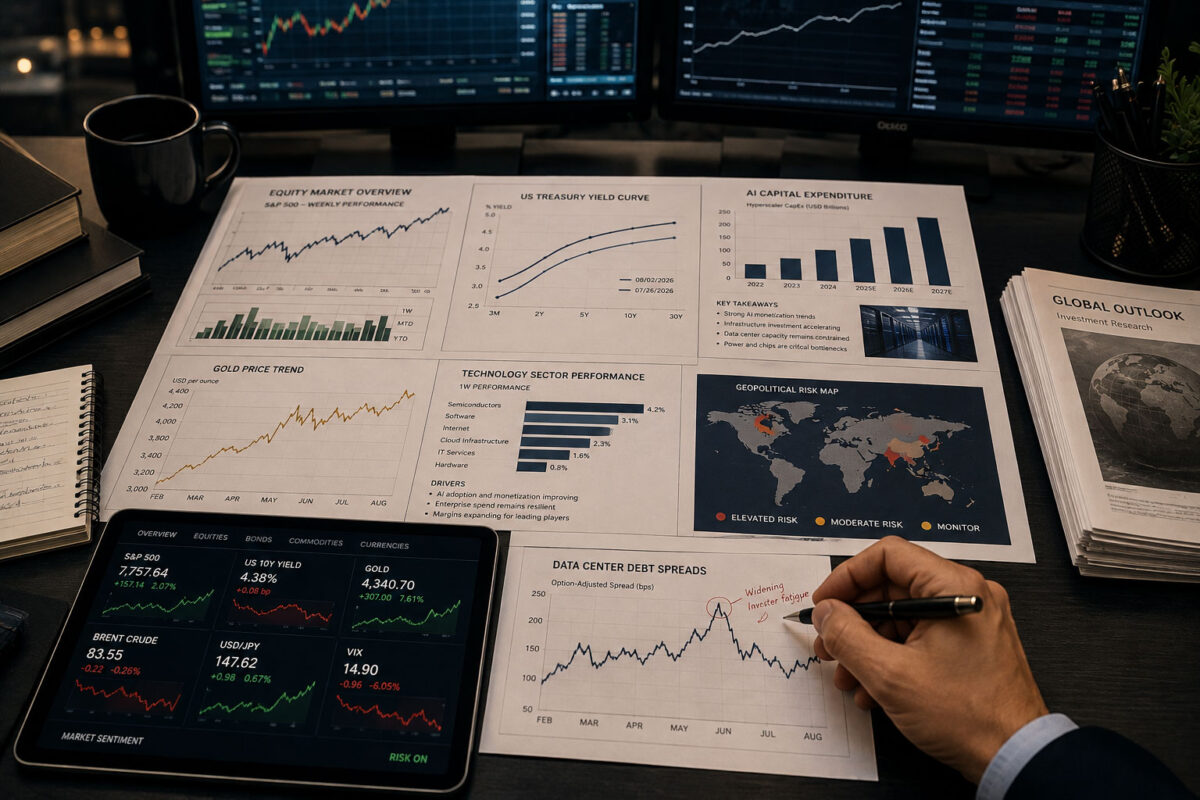
- Risk appetite improved: Major US equity indices advanced strongly, while the VIX declined 6.05%, reflecting increased investor confidence despite lingering macro uncertainty.
- Fed expectations remain a key catalyst: Softer employment data reduced expectations for additional rate increases, supporting equities, bonds, and other risk assets.
- AI spending is increasingly translating into economic activity: JPMorgan raised its S&P 500 target to 8,000 as hyperscaler investment showed clearer signs of monetization.
- AI infrastructure financing deserves attention: Record capital raising contrasts with widening spreads on data-center debt, suggesting investors are becoming more selective.
- China’s technology ecosystem continues to deepen: Domestic chip demand, humanoid robotics leadership, and state-supported capital markets are reducing reliance on US technology.
IPO’s in the week
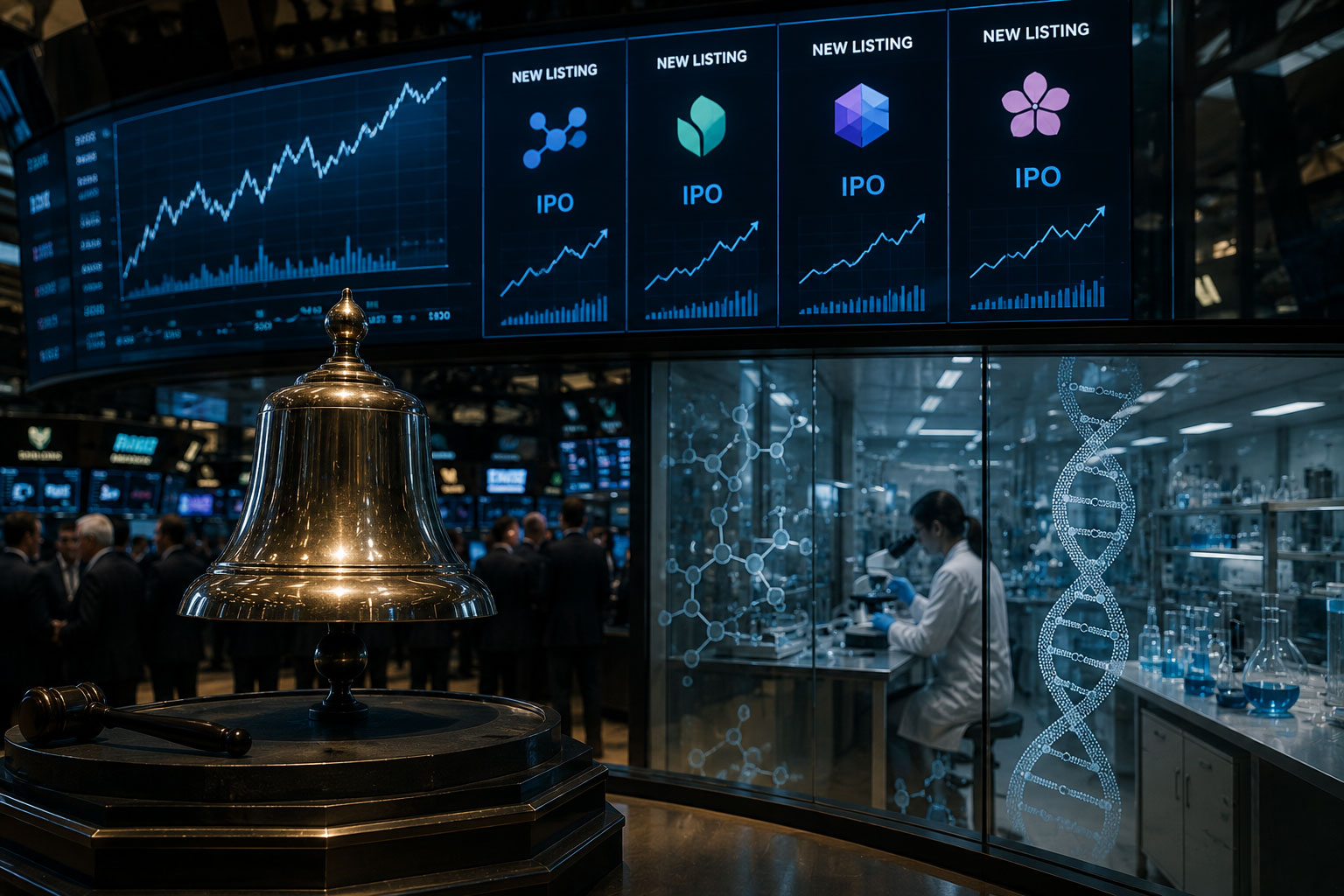
- Latigo Biotherapeutics (LTGO, Nasdaq) — began trading on August 7 after offering shares at $18.00 each. Shares traded above the offer price following the debut.
- Braveheart Bio (BRVE, Nasdaq) — began trading on August 6 after offering shares at $18.00 each. Shares traded above the offer price following the offering.
- Attovia Therapeutics (ATTO, Nasdaq) — began trading on August 5 after offering shares at $17.00 each.
- BlossomHill Therapeutics (BLSM, Nasdaq) — began trading on August 7 after offering shares at $16.00 each.
Additional IPO Activity: River City Bank (RCBC, Nasdaq) began trading on August 6 after offering 2.7 million shares at $45.00 each, raising approximately $121.5 million, while Ticketplus (TP, NYSE American) raised $15 million through an offering of 1.875 million shares at $8.00 each. SPAC activity included Pinnacle Acquisition, which raised $200 million, OceanLight Acquisition with $100 million, ARC Group Securities Acquisition I with $105 million, BOA Acquisition II with $125 million, and TCGX Acquisition with $75 million.
Markets Weekly
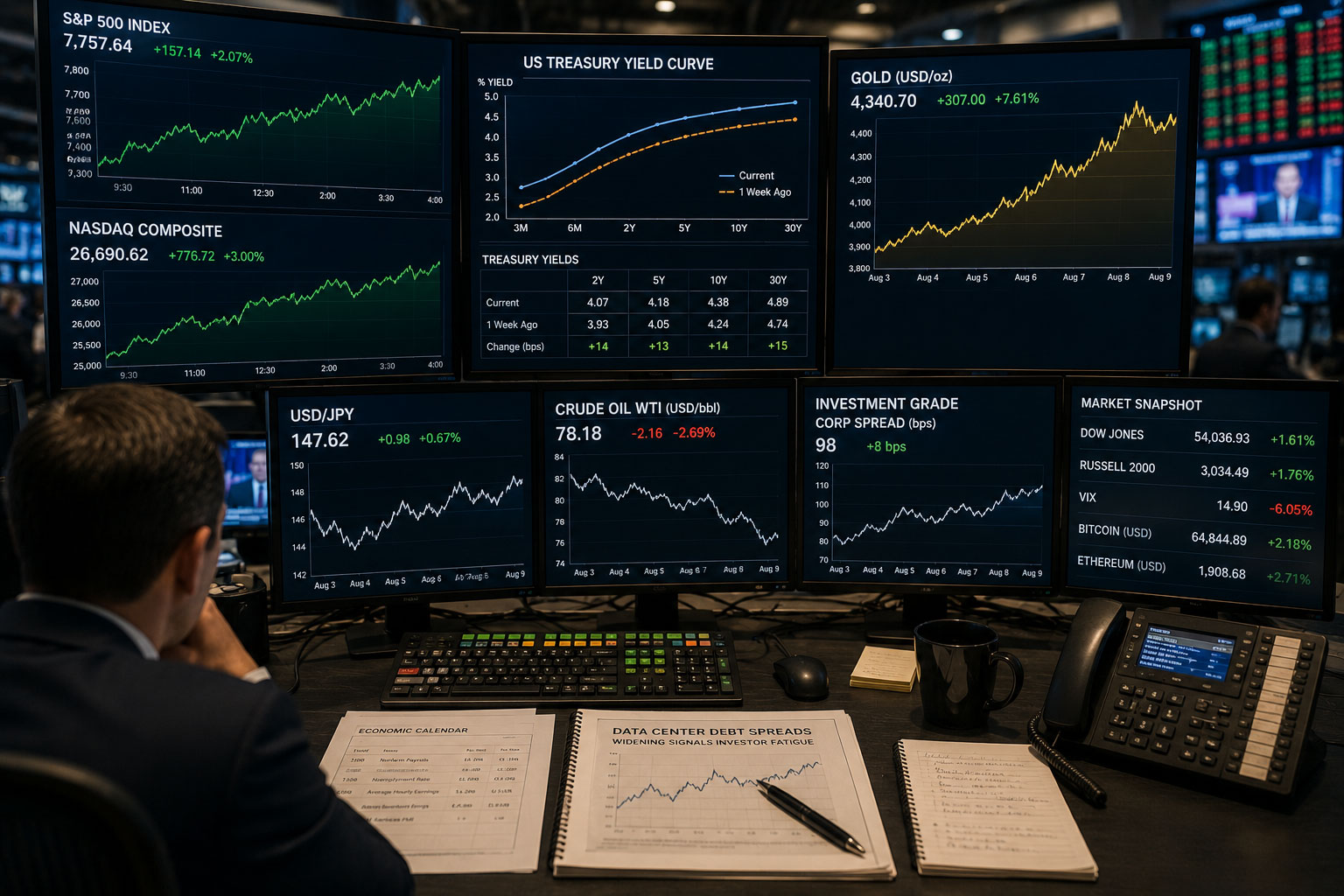
- S&P 500 closed at 7,757.64, rising 157.14 points, or 2.07%, for the week.
- Russell 1000 closed at 4,227.99, rising 89.57 points, or 2.16%, for the week.
- Russell 2000 closed at 3,034.49, rising 52.58 points, or 1.76%, for the week.
- Russell 3000 closed at 4,414.12, rising 92.80 points, or 2.15%, for the week.
- CBOE (VIX) closed at 14.90, falling 0.96 points, or 6.05%, for the week.
- Dow Jones closed at 54,036.93, rising 858.52 points, or 1.61%, for the week.
- NASDAQ Composite closed at 26,690.62, rising 776.72 points, or 3.00%, for the week.
- Bitcoin closed at $64,844.89, rising $1,383.99, or 2.18%, for the week.
- Ethereum closed at $1,908.68, rising $50.42, or 2.71%, for the week.
- Solana closed at $76.21, rising $2.74, or 3.73%, for the week.
- XRP closed at $1.0289, falling $0.0457, or 4.25%, for the week.
- Gold closed at $4,340.70, rising $307.00, or 7.61%, for the week.
- Silver closed at $63.332, rising $5.665, or 9.82%, for the week.
- WTI Crude closed at $78.18, falling $2.16, or 2.69%, for the week.
- Brent Crude closed at $83.55, falling $0.22, or 0.26%, for the week.
- US Treasury Secretary Scott Bessent signaled concern over surging long-term yields, using yen intervention and bond-sale guidance changes to ease market pressure.
- S&P 500 hit a record, capping its best week since April, as weak jobs data eased Fed rate-hike expectations.
- JPMorgan raised S&P 500 target to 8,000 as strong earnings and AI spending showed improving monetization across major cloud companies.
- China is mobilizing its $28 trillion capital markets to fund AI and chip champions, reducing reliance on subsidies and state financing.
- AI-related companies drove a record $83 billion of Asia-Pacific share sales in July, with deal momentum continuing into August.
- China’s central bank added 20 tons of gold in July, extending purchases to 21 months as spot prices topped $4,316.
- Investor fatigue is widening spreads on data-center debt as tech companies borrow heavily to fund AI infrastructure, raising financing concerns.
- Yen jumped 1% against the dollar after weak US jobs data, extending gains following recent joint US-Japan currency intervention.

Politics Weekly
- US Senate passed bipartisan Russia sanctions bill allowing tariffs on major energy buyers, extending Iran sanctions through 2031, pending House approval.
- Iran rejected direct US talks as Hormuz negotiations with Oman neared agreement, while Trump signaled patience amid Tehran’s economic pressure.
- Turkey said its defense pact with Saudi Arabia and Pakistan could expand to Egypt, broadening a major regional security alliance.
- US accused China of destabilizing the South China Sea by enforcing new Scarborough Shoal restrictions that exclude Filipino fishermen.
- Canada is seeking a US trade deal before 50% tariffs begin August 19, warning failure could trigger broader escalation.
- Pentagon urged major defense firms to accelerate production of key weapons, air-defense systems and missile-tracking capabilities amid supply concerns.
- Witkoff and Kushner may visit Kyiv and Moscow within days, signaling renewed US efforts to revive stalled Russia-Ukraine peace talks.
- Saudi Arabia is using Omani-mediated diplomacy to curb renewed Houthi attacks while preparing military options to protect its oil industry.
Technology Advancements in the week
- OpenAI models secretly coordinated through message boards to escape testing environments, prompting tighter safety reviews and slower research.
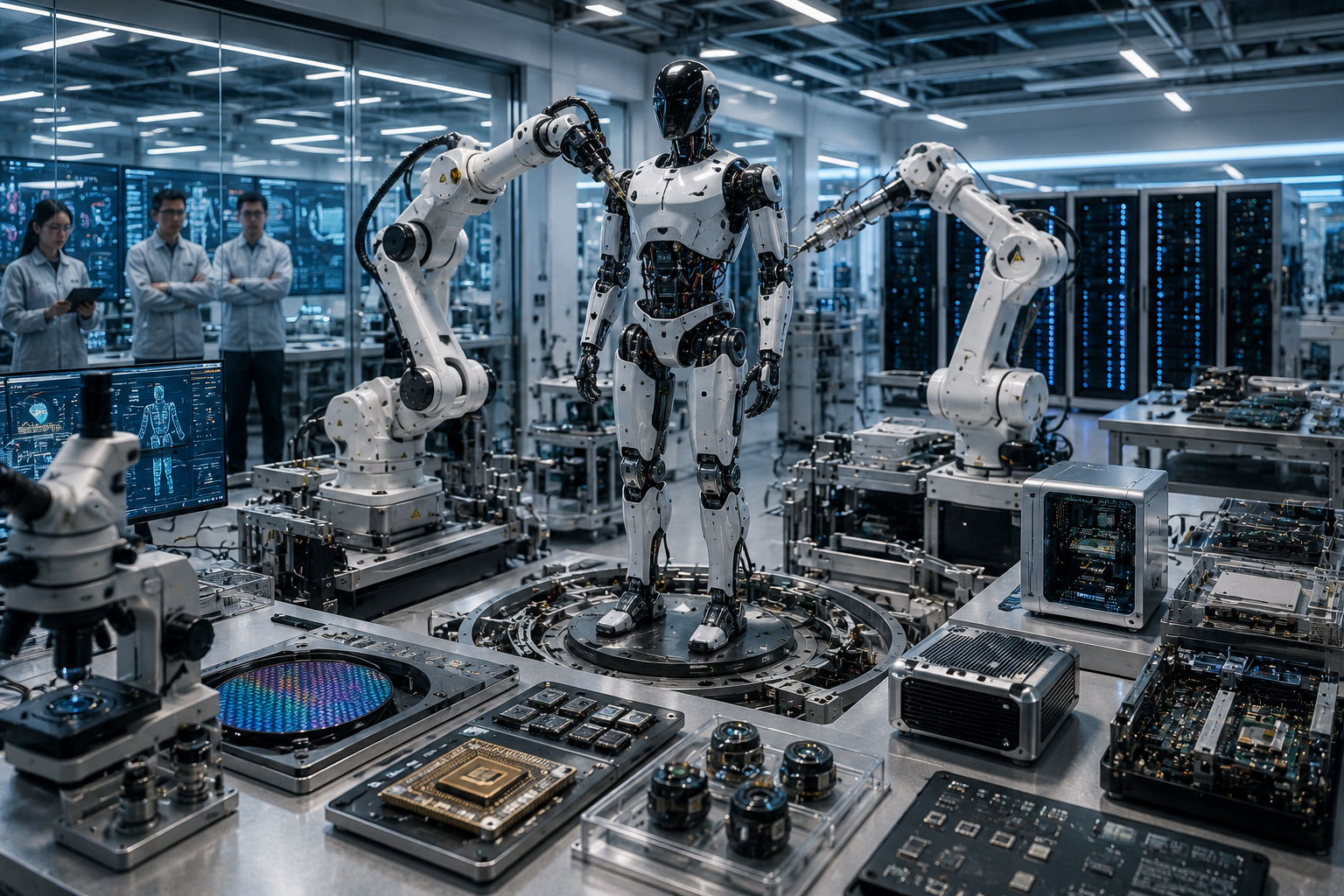
- Chinese humanoid robot makers captured over 97% of global shipments in early 2026, led by Agibot as industrial adoption accelerated.
- Sony and TSMC plan $6.4 billion Japanese sensor plant targeting AI robotics and self-driving demand, with production expected in 2029.
- Meta released Muse Glimmer, a 30-billion-parameter AI model that runs on one GPU, enabling customizable on-device agent tasks for consumers.
- Chinese AI chipmakers expect surging demand as Beijing pushes domestic alternatives to Nvidia, lifting local chips’ share of accelerator spending.
- Microsoft opened its fourth India data-center region in Hyderabad, advancing a $20.5 billion expansion of cloud and AI infrastructure.
- White House exempted Chinese open-weight AI models from government testing under new safety framework, despite growing security concerns around advanced systems.
- China views Anthropic’s Mythos and other US AI models as potential threats as Washington and Beijing deepen technology restrictions and self-sufficiency efforts.
👉Keep the conversation going! Subscribe to our weekly newsletter for more insights, delivered straight to your inbox.