
Sales are rising. The team is busier. Revenue reports look stronger. Yet the bank balance feels tighter, and paying employees and suppliers takes more planning than it did a few months ago.
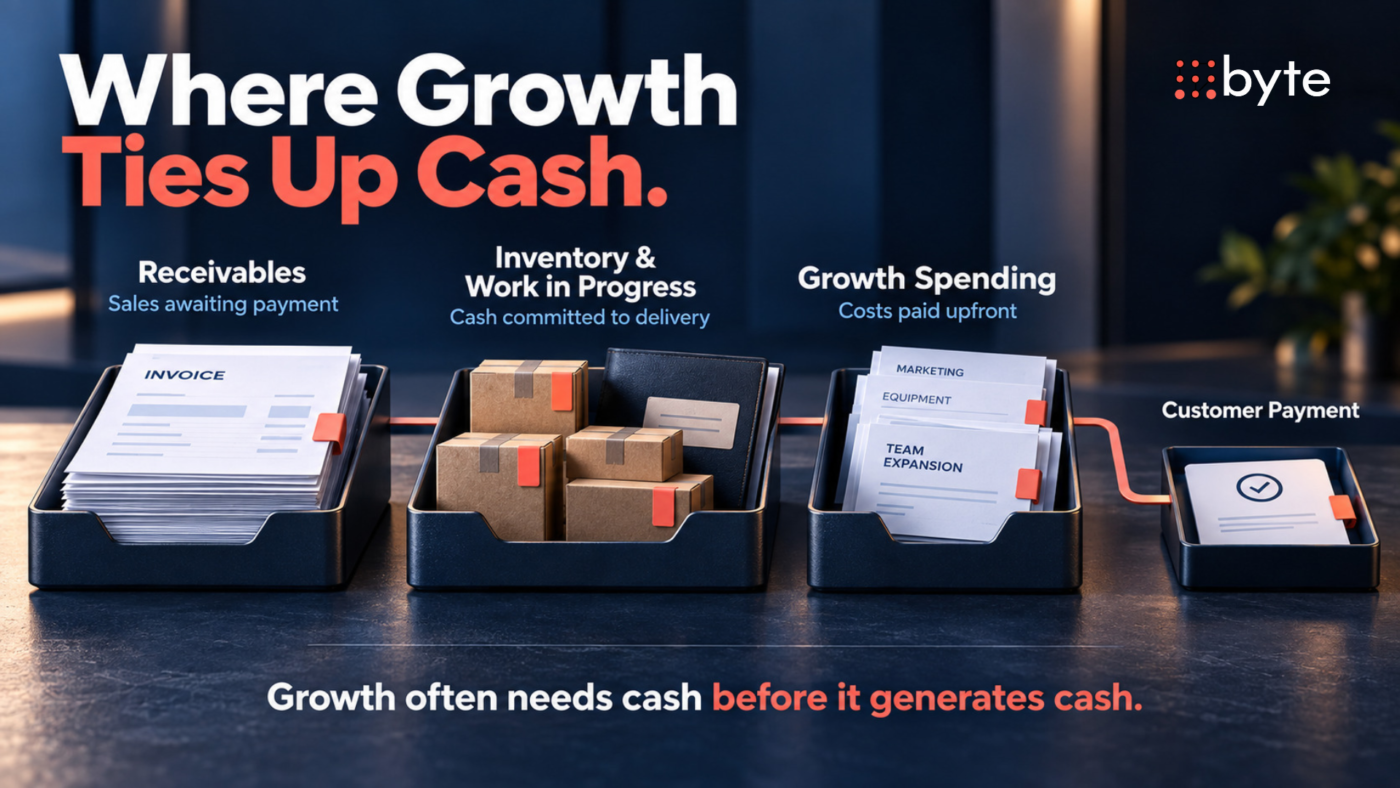
This can happen when growth requires cash before it produces cash. A business may pay for staff, inventory, and project delivery weeks or months before customers settle their invoices.
For growing businesses, cash flow management starts with understanding that gap: how much cash must be committed to new sales, and when will it come back? The answer affects contracts, hiring, purchasing, and the pace of expansion.
Revenue, Profit, and Cash Tell Different Stories
Revenue, profit, and cash measure different things.
Revenue reflects sales or work delivered. Under accrual accounting, it may be recorded before the customer pays. Profit reflects revenue minus the expenses recognized for the period. Cash flow tracks money entering and leaving the business.
Consider a service company that completes and invoices a $30,000 project. Its customer has 60 days to pay, while the employees and contractors who delivered the work must be paid this month. The project may increase reported revenue and still create an immediate cash need.
Equipment purchases, loan principal repayments, and owner distributions can also reduce available cash without appearing as equivalent expenses on that month’s profit and loss statement.
A revenue report therefore tells only part of the story. Management also needs to know what has been collected and what payments are coming due.
Check Where Sales Are Getting Stuck
More sales on credit often mean more accounts receivable: money customers owe the business. That is expected. The concern is whether outstanding invoices are growing faster than revenue or taking longer to collect.
Suppose a company records $150,000 in sales during a month but collects $100,000 against those sales by month-end. The remaining $50,000 is still outstanding, while payroll, rent, and supplier bills continue to fall due.
A collection delay may begin well before an invoice becomes overdue. Work may be completed but billed late. A missing purchase order, incorrect invoice detail, or unresolved customer query may hold up approval.
Look at the full path from delivery to payment:
- How long does it take to issue an invoice after work becomes billable?
- Are the customer’s billing requirements confirmed before work begins?
- Which invoices are overdue, and who is resolving disputes?
- Which customers regularly pay later than their agreed terms?
An accounts receivable balance shows how much is owed. These questions help explain when that money is likely to arrive.
Review Who Funds the Payment Gap
Customers may have 60 days to pay while suppliers expect payment within 15 days. Payroll may be due every two weeks. The business funds the time between those payments.
As sales volume rises, the amount tied up in that gap can rise too, even if payment terms remain unchanged. A large contract may look profitable but still require more cash than the business can comfortably commit before the first customer payment.
Before accepting a significant project, estimate when delivery costs start, when invoices can be issued, and when payment is realistically expected. Where appropriate, deposits, milestone billing, or more frequent invoicing can reduce the amount funded upfront.
Payment terms are part of the financial decision to take on work. They deserve attention before the delivery commitment is made.
Account for Inventory and Unfinished Work
Product businesses often buy inventory before making a sale. Growing demand may require larger orders or earlier purchases to allow for supplier lead times. Cash remains tied up until the products sell and customers pay.
Service businesses can face a similar delay through unfinished work. An agency or consulting firm may pay staff and contractors for weeks before reaching a billable milestone. Scope changes and slow approvals can extend that period.
Review how much money is committed to stock or unfinished projects, how long it has been there, and what needs to happen before the business can bill and collect. This can reveal pressure that is difficult to see in a sales pipeline alone.
Check Whether New Revenue Is Earning Enough
Payment timing is not the only possible cause of tighter cash.
Revenue may rise because the business discounts its work, accepts lower-margin contracts, or spends more on delivery than expected. Extra revisions, contractor hours, and unbilled changes can leave a project earning much less than its original estimate suggested.
Compare actual margins by project, customer, or product. Include delivery costs and rework, rather than relying only on the quoted price.
This distinction matters. A profitable project awaiting payment creates a timing problem. Consistently underpriced work creates an earnings problem. Faster collections can help the first; pricing and delivery decisions must address the second.
Give Each Growth Decision a Cash Requirement
New hires, advertising, equipment, and software often require payment before they produce a return. Several sensible investments made at once can place substantial pressure on cash.
Before approving a growth plan, ask:
- When will each new cost begin?
- When is the related customer payment expected?
- How much cash will be committed in between?
- What happens if sales or collections arrive later than planned?
For a major investment, financial models for product and growth decisions can help management test these assumptions together.
A revenue target becomes more useful when it includes the cash needed to deliver it.
Forecast the Lowest Cash Point
Once the sources of pressure are clear, a cash forecast can show when they may become a problem.
A rolling weekly view can place expected customer receipts alongside payroll, supplier payments, taxes, debt payments, and planned growth spending. Use collection dates based on how customers actually pay, rather than assuming every invoice arrives exactly on its due date.
Then test what happens if a major customer pays late, a project milestone slips, or delivery costs rise. Focus on the lowest projected cash balance and the week it occurs. A quarter can look healthy overall while one week presents a shortfall.
For the steps involved in building and updating this view, see Byte Advisory’s guide to cash flow forecasting for small businesses.
Respond to the Cause, Not Just the Balance
A falling bank balance is a signal to investigate. The appropriate response depends on what is creating the pressure.
Late billing calls for a better invoicing process. Overdue receivables require collection follow-up and dispute resolution. Slow-moving stock needs a purchasing review. Weak project margins may require changes to pricing, scope, or delivery.
Growth spending may need to be introduced in stages so commitments align more closely with collections. If the gap is temporary, financing may be worth evaluating against realistic future cash receipts. It should not stand in for fixing recurring losses.
Make Growth Financially Sustainable
Higher revenue is encouraging. It does not, by itself, show how much cash is needed to support that revenue or when the cash will return.
Follow the money through purchasing, staffing, delivery, billing, and collection. When management knows where cash is tied up, it can make better decisions about contracts, hiring, payment terms, and expansion.
Byte Advisory’s financial consulting services support businesses with financial planning, cash flow management, forecasting, and clearer decisions about growth.
Revenue growing while cash gets tighter? Speak with Byte Advisory about identifying the source of the pressure and planning the cash needed for your next stage of growth.
[email protected]
byteadvisory.com/contact/