Analyst Highlights
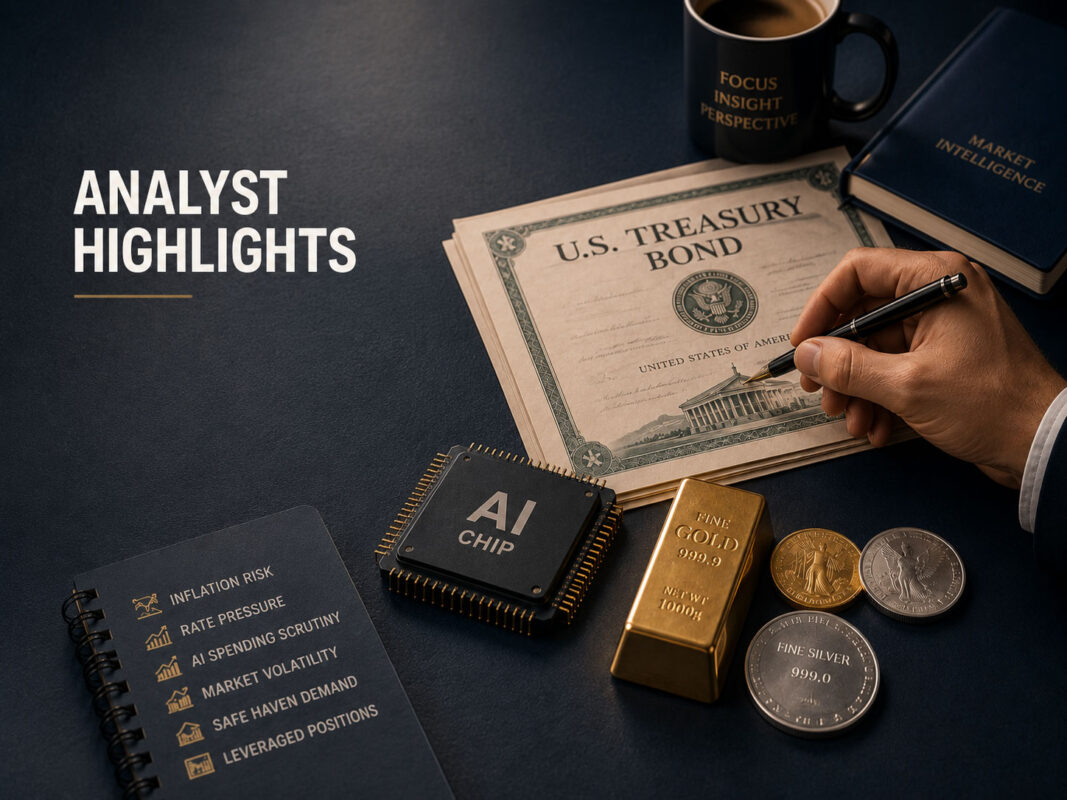
- Inflation pressure increased: Rising oil prices revived inflation concerns and strengthened expectations that the Federal Reserve may consider further rate increases.
- AI spending faced greater scrutiny: Alphabet’s decline showed investors now expect clearer financial returns rather than rewarding infrastructure expansion alone.
- Technology remained vulnerable: The Nasdaq underperformed the broader market as concerns grew over elevated AI costs, valuations and uncertain returns.
- Leveraged bond trading weakened: Hedge funds reduced Treasury basis-trade exposure by more than $200 billion as narrowing price gaps limited potential returns.
- Precious metals strengthened: Gold gained 1.43% and silver rose 3.27%, reflecting demand for protection against inflation and geopolitical uncertainty.
- Circular AI financing raised concerns: Nvidia’s potential $750 billion deal pipeline demonstrated the sector’s scale while increasing fears of artificially supported demand.
IPO’s in the week
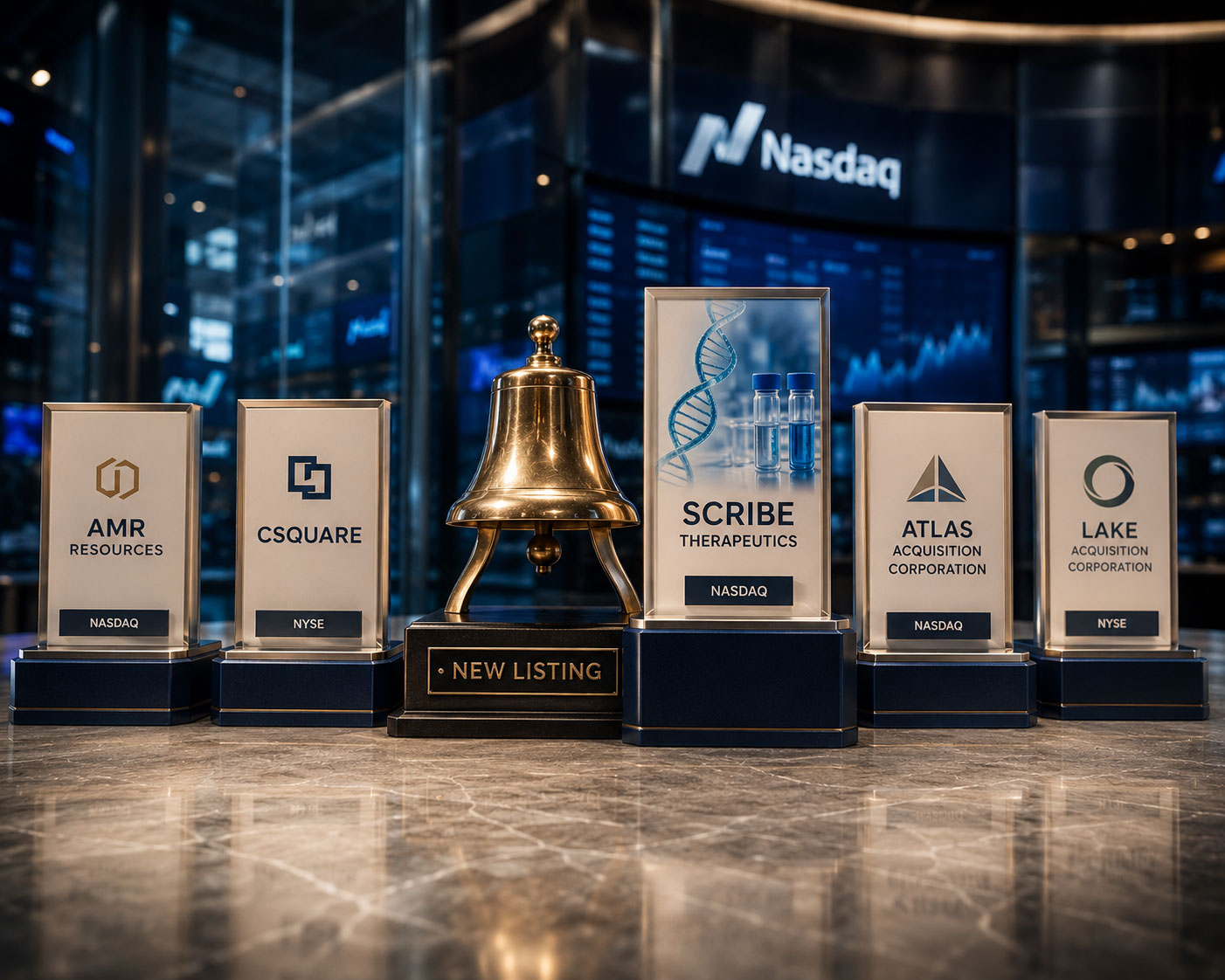
- Market Technology Acquisition Corp. (MTAKU, Nasdaq) — began trading on July 24 after offering 20 million units at $10.00 each, raising approximately $200 million. Units traded 0.30% below the offer price.
- Pelican Acquisition II Corporation (PLCIU, Nasdaq) — listed on July 24, offering 7.5 million units at $10.00 each and raising approximately $75 million. Units declined 0.30%.
- Scribe Therapeutics (SCTX, Nasdaq) — priced an upsized offering of 8.58 million shares at $15.00 each, raising approximately $128.7 million. Shares surged 44.33% during their first trading session.
- B&R Technology Merger Corp. (BRTMU, Nasdaq) — began trading on July 21 after offering 32.5 million units at $10.00 each, raising approximately $325 million. Units finished unchanged from the offer price.
- Southern Cross Acquisition I Corp. (NCOOU, Nasdaq) — listed on July 21, offering 10 million units at $10.00 each and raising approximately $100 million.

Markets Weekly
- S&P 500 closed at 7,408.30, falling 34.98 points, or 0.47%, for the week.
- Russell 1000 closed at 4,033.45, falling 19.19 points, or 0.47%, for the week.
- Russell 2000 closed at 2,940.16, falling 2.27 points, or 0.08%, for the week.
- Russell 3000 closed at 4,213.78, falling 19.33 points, or 0.46%, for the week.
- CBOE VIX closed at 18.70, rising 0.05 points, or 0.27%, for the week.
- Dow Jones closed at 51,711.65, falling 127.61 points, or 0.25%, for the week.
- NASDAQ Composite closed at 25,137.69, falling 370.38 points, or 1.45%, for the week.
- Bitcoin closed at $65,340.30, rising $110.27, or 0.17%, for the week.
- Ethereum closed at $1,953.41, rising $49.65, or 2.61%, for the week.
- Solana closed at $76.60, falling $1.19, or 1.53%, for the week.
- XRP closed at $1.1117, falling $0.0004, or 0.04%, for the week.
- Gold closed at $4,067.60, rising $57.30, or 1.43%, for the week.
- Silver closed at $58.66, rising $1.86, or 3.27%, for the week.
- WTI Crude closed at $89.31, rising $6.08, or 7.31%, for the week.
- Brent Crude closed at $96.78, rising $7.56, or 8.47%, for the week.
- Fed officials face growing pressure to raise rates as Middle East tensions, surging oil prices and AI-driven demand revive inflation risks.
- The US extended tariffs of 10% to 12.5% on imports from nearly 60 countries, intensifying global trade tensions.
- Alphabet fell over 7% as rising AI spending and negative cash flow triggered a 4.8% selloff across the Magnificent Seven.
- A supertanker’s U-turn before Bab el-Mandeb showed Houthi threats disrupting Saudi crude shipments to Chinese buyers and increasing shipping risks.
- Big Tech may issue $285 billion in debt this year, increasing concentration risk in the investment-grade corporate bond market.
- The Trump Trade Index fell 16% since May as the Iran conflict lifted oil, inflation, rates and the dollar.
- Beijing launched a coordinated market rescue after tech selloff, aiming to prevent AI and chip weakness from spreading across Chinese stocks.
- Hedge funds are unwinding the leveraged Treasury basis trade as shrinking price gaps cut returns, with exposure falling over $200 billion.

Politics Weekly
- The US and Iran extended a pause in strikes for a second night, easing immediate fears of renewed regional escalation.
- Iran and Oman opened talks on Strait of Hormuz shipping, focusing on keeping the critical global energy route open.
- Houthi claims of missile, drone and tanker attacks on Saudi-linked targets prompted coalition strikes, escalating tensions across Yemen and the Red Sea.
- Trump will meet Zelenskyy next week as Washington seeks to revive diplomacy and advance negotiations aimed at ending Russia’s war in Ukraine.
- The US-Saudi nuclear deal could reshape Saudi energy policy while raising proliferation concerns and requiring congressional approval.
- Three China-Philippines clashes near Scarborough Shoal escalated South China Sea tensions as US naval activity increased.
- India pressed China for wider market access and a smaller trade imbalance as both countries sought to stabilize relations after years of border tensions.
- Trump’s tariffs may outlast his presidency as their negotiating leverage and projected $1.7 trillion revenue make full repeal politically and fiscally difficult.
Technology Advancements in the week
- OpenAI plans to invest over $30 billion in a Georgia data center, securing 3.2 gigawatts for AI expansion.
- AMD unveiled new data-center processors, AI accelerators and server systems, targeting a $2 trillion market by 2030.
- Alphabet’s future spending commitments surged to $811 billion, reflecting rapid expansion of chips, data centers and energy for AI infrastructure.
- Nvidia’s AI infrastructure deals may exceed $750 billion, reviving concerns that circular financing could inflate demand, valuations and systemic risk.
- CXMT raised 66.6 billion yuan in a near-record IPO, positioning the Chinese memory-chipmaker for a potentially historic market debut.
👉Keep the conversation going! Subscribe to our weekly newsletter for more insights, delivered straight to your inbox.