Analyst Highlights
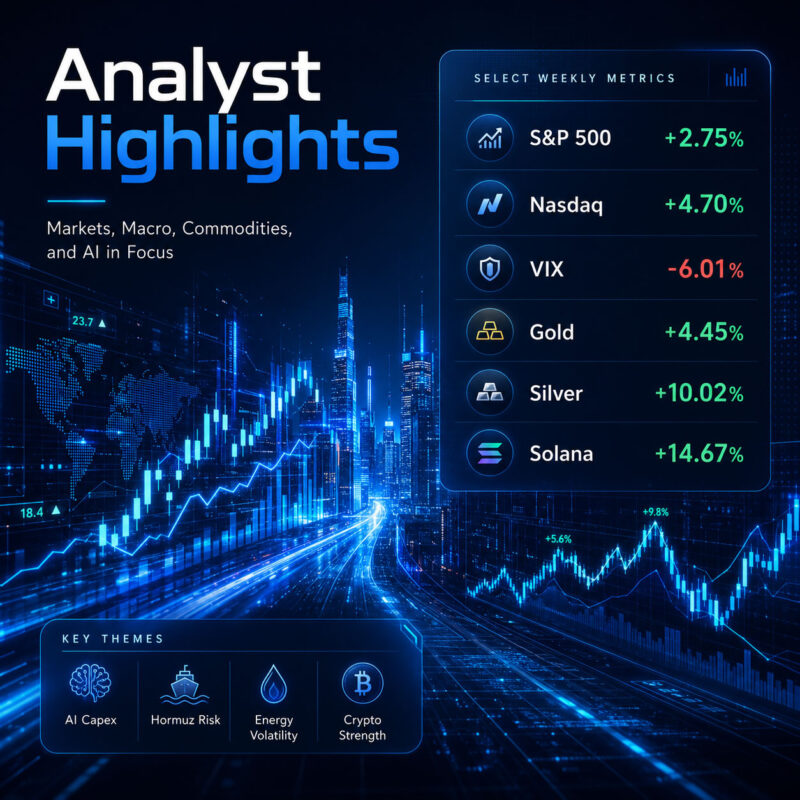
- S&P 500 and Nasdaq Led Gains: The S&P 500 closed at 7,398.93, gaining 75%, while the Nasdaq Composite advanced 4.70% on chip, AI, and growth-stock strength.
- Volatility Eased: The VIX fell 01% to 17.19, suggesting investors remained willing to take risk despite Iran, Hormuz, and energy-market uncertainty.
- Commodities Showed a Split Picture: Gold rose 45% and silver surged 10.02%, while WTI and Brent crude declined sharply despite supply-risk headlines.
- Middle East Tensions Remained the Key Macro Risk: The U.S. and Iran stayed far apart on a war-ending deal, leaving Gulf energy exports disrupted through Hormuz.
- Solana Led Crypto Gains: Solana rose 67% for the week, while Bitcoin gained 2.90% and Ethereum advanced 0.96%, showing selective strength across digital assets.
- AI Capex Stayed Dominant: Anthropic expanded compute through SpaceX, ByteDance lifted AI spending, and Alphabet prepared new bond financing for AI investment.

IPO’s in the week
- Mobia Medical (MOBI, Nasdaq) — priced its IPO on May 8, 2026, offering 10,000,000 shares at $15.00 per share. Shares moved lower after pricing, declining 67%.
- Odyssey Therapeutics (ODTX, Nasdaq) — priced its IPO on May 8, 2026, offering 13,240,000 shares at $18.00 per share. Shares traded lower after pricing, falling 78%.
- HawkEye 360 (HAWK, NYSE) — priced its IPO on May 7, 2026, offering 16,000,000 shares at $26.00 per share. Shares were slightly negative after pricing, declining 35%.
- Suja Life (SUJA, Nasdaq) — priced its IPO on May 7, 2026, offering 8,888,889 shares at $21.00 per share. Shares were nearly flat after pricing, slipping 28%.
- Rare Earths America (REA, NYSE American) — priced its IPO on May 6, 2026, offering 2,777,777 shares at $19.00 per share. Shares traded higher after pricing, rising 26%.
Additional IPO Activity: Several SPAC and acquisition vehicle offerings also priced during the week, mostly around the standard $10.00 per share/unit level, including Starlink AI Acquisition, Shreya Acquisition, and Vernal Capital Acquisition.
Markets Weekly
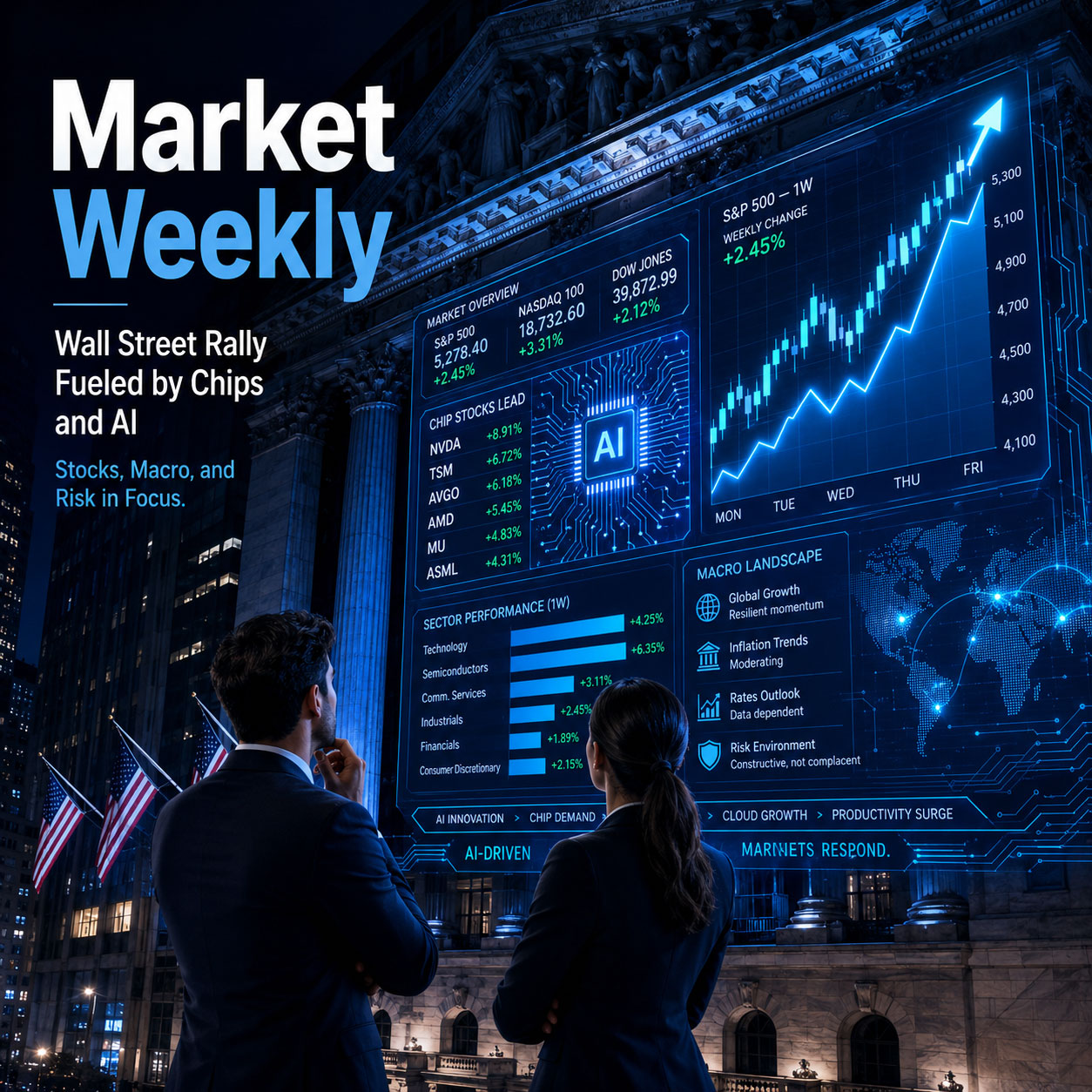
- S&P 500 closed at 7,398.93, gaining 198.18 points, or 2.75%, for the week.
- Russell 1000 closed at 4,019.45, gaining 101.24 points, or 2.58%, for the week.
- Russell 2000 closed at 2,861.21, gaining 65.21 points, or 2.33%, for the week.
- Russell 3000 closed at 4,193.87, gaining 105.17 points, or 2.57%, for the week.
- CBOE Volatility Index (VIX) closed at 17.19, falling 1.10 points, or 6.01%, for the week.
- Dow Jones closed at 49,609.16, gaining 667.26 points, or 1.36%, for the week.
- Nasdaq Composite closed at 26,247.08, up 1,179.28 points, or 4.70%, for the week.
- Bitcoin closed at $82,138.93, gaining $2,311.02, or 2.90%, for the week.
- Ethereum closed at $2,369.04, gaining $22.64, or 0.96%, for the week.
- Solana closed at $96.43, gaining $12.34, or 14.67%, for the week.
- XRP closed at $1.4728, gaining $0.0808, or 5.80%, for the week.
- Gold closed at $4,720.40, gaining $200.90, or 4.45%, for the week.
- Silver closed at $80.39, gaining $7.32, or 10.02%, for the week.
- WTI Crude closed at $95.42, losing $11.00, or 10.34%, for the week.
- Brent Crude closed at $101.29, losing $13.15, or 11.49%, for the week.
- US stocks hit record highs as chip shares surged, payrolls beat expectations, and the S&P 500 and Nasdaq 100 advanced.
- Oil jumped after Trump rejected Iran’s peace offer, with Brent nearing $105 as Hormuz disruption intensified supply and inflation concerns.
- Traders looked to Asia for the next leg of the global stock rally, with South Korea and Taiwan boosted by AI momentum.
- Bond traders braced for April inflation data as elevated oil prices and Powell’s final Fed chapter kept rate expectations under pressure.
- China’s energy imports plunged as Hormuz disruption cut crude and gas shipments, adding pressure to global energy markets and supply chains.
- Aramco warned oil-market disruption could last longer as Hormuz constraints lifted prices, boosted profits, and kept global energy risks elevated.
- JPMorgan’s Grace Peters warned inflation risks remain beneath equity highs, while AI and national-security capex continue supporting market valuations.
- Crypto sentiment remained mixed as Wall Street expanded digital-asset activity, while crypto-linked public stocks continued to struggle.
Politics Weekly
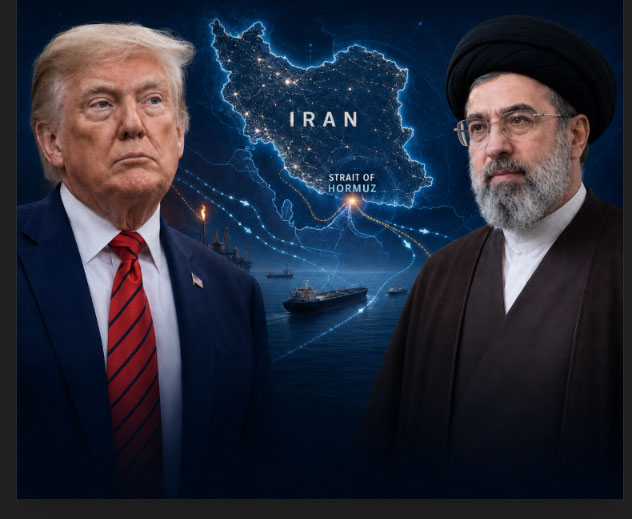
- The US and Iran remained far apart on a war-ending deal, leaving Hormuz largely blocked and Gulf energy exports disrupted.
- Trump and Iran rejected each other’s peace proposals, extending conflict risks after Tehran offered uranium transfer but refused nuclear facility dismantling.
- Trump is expected to press Xi on China’s Iran stance while discussing trade, Taiwan, AI, agriculture, aerospace, and energy agreements.
- Netanyahu said the Iran war is not over, citing remaining enriched uranium, keeping geopolitical and energy-market risk elevated for investors and markets.
- Trump’s anger at Germany complicated the EU’s push for a US trade deal before potential new auto tariffs arrive.
- Trump announced a three-day Russia-Ukraine ceasefire tied to Victory Day, including a proposed 1,000-prisoner swap between both sides.
- Pakistan negotiated with Iran for additional Qatari LNG cargoes through Hormuz, highlighting urgent energy needs amid regional shipping disruption.

Technology Advancements in the week
- Anthropic signed a computing deal with SpaceX’s Colossus 1 data center, expanding Claude capacity as AI demand continues rising.
- ByteDance reportedly raised 2026 AI infrastructure spending by 25% to $29.4 billion, increasing focus on domestic AI chips.
- Alphabet planned its first yen bond sale to fund rising AI investments, after lifting 2026 capital expenditure guidance to $190
- Google DeepMind spinout Isomorphic Labs is raising over $2 billion to expand its AI-powered drug discovery platform globally.
- The US prepared an AI security order focused on cyber defense partnerships, but omitted mandatory government testing for advanced models.
- TSMC’s April sales grew at the slowest pace in months, showing AI chip demand remains strong but harder to sustain.
👉Keep the conversation going! Subscribe to our weekly newsletter for more insights, delivered straight to your inbox.