
- U.S. hiring slowed to 29,000 jobs in September, while inflation remained too high for an easy Fed decision.
- Nasdaq gained 0.45% for the week, even as the S&P 500 and Dow declined.
- Oura postponed its $2.1 billion IPO; Accelevation priced well below its proposed range.
- The G7 agreed to release oil reserves as disruption around the Strait of Hormuz continued.
- AI infrastructure drew major commitments, led by Broadcom’s potential $42 billion in financing for Anthropic’s compute leases.
- Structure financing.
#Markets #FOMC #RateCut #CPI #NFP #Treasuries #Equities #Gold #OPECPlus #Oil
#AI #Apple #OpenAI #Nvidia #Broadcom #DataCenters #CloudInfrastructure #ETFs #Crypto
👉 Visit us at Byte Advisory: https://lnkd.in/e4SYKwGt
Analyst Highlights:
- The Fed’s trade-off sharpened. September payrolls rose just 29,000, but 3.4% headline PCE inflation limits how readily policymakers can respond to weaker hiring.
- Equity gains remained concentrated. Nasdaq rose 0.45% while the Dow fell 1.26%, showing how technology strength masked a softer broader market.
- IPO investors demanded a discount. Oura’s postponement and Accelevation’s pricing 18% below its proposed midpoint suggest tougher conditions for ambitious valuations.
- AI financing moved closer to chip supply. Broadcom’s proposed funding for Anthropic’s compute leases would deepen the financial ties between infrastructure suppliers and their largest customers.
- Power and capacity became central to AI expansion. Japan’s planned data-center project and Samsung’s $1 billion commitment show the scale of investment needed beyond chips.
- Oil reserves offered a buffer, not a resolution. The G7’s planned release may ease near-term pressure, while Hormuz restrictions and the widening Yemen conflict keep supply risks in view.
IPOs in the week:

- Oura (OURA) postponed its proposed $2.1 billion IPO, which had targeted 50 million shares at $40–$44, citing market uncertainty.
- Accelevation (ACCV) raised $540 million after pricing its IPO 18% below the proposed midpoint; shares finished Friday 2% below the offer price.
- Anthropic’s confidential IPO prospectus showed nearly $4.6 billion in 2025 revenue and an $8.06 billion operating loss, according to Reuters; the offering had not priced.
- Roze AI (RZAI) completed a direct listing, raising no primary IPO proceeds; its shares finished the week up 149%.
- Southport Acquisition II (PORT.U) raised $200 million in the week’s sole priced SPAC offering, targeting an AI-related acquisition.
- Primagrove (YHTE), LPC (LPCI) and Source Agriventures (SRAV) filed proposed IPOs targeting $31 million, $19 million and $15 million, respectively; pricing remains pending.
- Georgia Banking Company (GBC) filed for a direct listing, joining the week’s pipeline of proposed public debuts.
Markets Weekly:

- S&P 500 closed at 7,722.72, falling 20.69 points, or 0.27% for the week.
- Russell 1000 closed at 4,197.70, falling 10.13 points, or 0.24% for the week.
- Russell 2000 closed at 2,832.90, falling 4.65 points, or 0.16% for the week.
- Russell 3000 closed at 4,371.55, falling 10.42 points, or 0.24% for the week.
- CBOE (VIX) closed at 15.31, rising 0.44 points, or 2.96% for the week.
- Dow Jones closed at 51,176.96, falling 651.66 points, or 1.26% for the week.
- NASDAQ (IXIC) closed at 27,190.86, rising 122.14 points, or 0.45% for the week.
- Bitcoin closed at $86,490, rising $2,041, or 2.42% for the week.
- Ethereum closed at $2,725.91, rising $38.37, or 1.43% for the week.
- Solana closed at $121.52, falling $0.44, or 0.36% for the week.
- XRP closed at about $1.52, roughly unchanged at the source’s displayed precision.
- Gold futures closed at $4,162.30, falling $158.90, or 3.68% for the week.
- Silver futures closed at $59.977, falling $4.268, or 6.64% for the week.
- WTI crude futures closed at $91.11, falling $1.30, or 1.41% for the week.
- Brent crude futures closed at $102.25, falling $2.07, or 1.98% for the week.
- U.S. payrolls rose only 29,000 in September, with unemployment at 4.2%, adding to evidence of slower hiring.
- August PCE inflation reached 3.4% year over year, while core inflation stood at 3.0%, complicating the Fed’s response to weaker employment.
- The Conference Board’s consumer-confidence index fell 6.7 points to 81.9 in September, its lowest level since April 2014.
- Job openings declined by 256,000 to 7.079 million, reinforcing signs of cooling labor demand.
- Freddie Mac’s average 30-year fixed mortgage rate climbed to 7.28% from 7.03%, further squeezing homebuyer affordability.
- The September ISM manufacturing PMI held at 54.5, signaling continued expansion even as factories faced input-cost pressure.
- The G7 agreed to coordinate a 100 million-barrel release of diesel and crude reserves over four months to ease supply pressure.
- OPEC+ kept November output targets steady on Sunday as Gulf shipping disruptions continued to constrain actual production.
Politics Weekly:

- Brazil’s Flavio Bolsonaro led Lula roughly 47% to 45% in Sunday’s presidential vote, setting up an October 25 runoff.
- China proposed tariff cuts on U.S. corn, wheat, meat and dairy but excluded soybeans, its largest American farm import.
- Iran said reopening the Strait of Hormuz depended on its conditions, while Qatar relayed messages between Tehran and Washington.
- Yemen’s internationally recognized government announced a campaign to retake Houthi-held territory, widening the conflict near vital shipping routes.
- Germany announced 1 billion euros in military aid for Ukraine and a separate 350 million euros for energy repairs.
- Zelenskiy said Ukraine would continue striking Russian refineries in response to Moscow’s attacks on Ukrainian infrastructure.
- A second federal judge blocked the administration’s $100,000 fee for new H-1B visas while litigation continued.
- A U.S. trade court heard challenges to forced-labor tariffs affecting imports from 60 trading partners; no ruling had been issued.
Technology Advancements in the week:
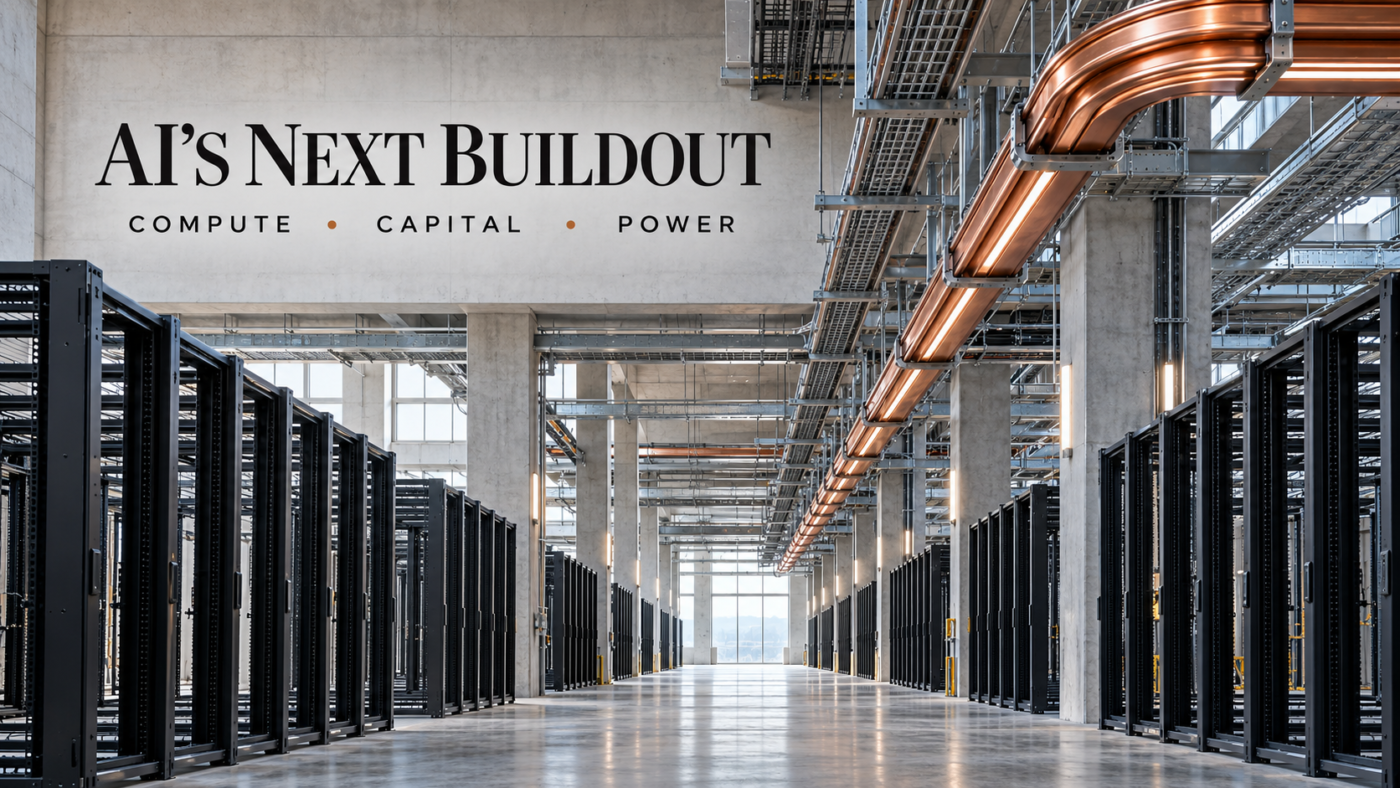
- Broadcom agreed to lend Anthropic up to $42 billion for compute leases, tying a chip supplier directly to AI infrastructure financing.
- JERA, Dell and RHAELM signed an MoU for a Japanese AI data-center project expected to require more than $15 billion across its development phases.
- Samsung and its affiliates committed $1 billion to KKR-backed Helix Digital to expand AI data centers, power systems and related infrastructure.
- Micron’s quarterly core data-center revenue rose to $18.0 billion as it began sampling 512GB DDR5 modules for AI servers.
- CoreWeave made NVIDIA Vera Rubin NVL72 systems available for production, with Cognition among the first customers running agentic workloads.
- OpenAI launched GPT-6.1 Sol for coding and computer use, pricing standard API tokens at one-fifth of Astra’s rates.
👉 Keep the conversation going! Subscribe to our weekly newsletter for more insights, delivered straight to your inbox.