
Analyst Highlights
- Treasury yields remain a key market pressure: Warsh’s Jackson Hole remarks pushed two-year yields higher as persistent inflation kept tighter policy in focus.
- Inflation remains above the Fed’s comfort zone: PCE inflation held at 3.7%, while core inflation remained elevated at 3.3%.
- The US labor market remains resilient: Initial jobless claims fell to 203,000 and continuing claims dropped below 1.78 million.
- Underlying economic demand remains stronger than headline growth: GDP held at 1.5%, while private domestic demand expanded a much stronger 4.2%.
- AI spending continues to support large-cap markets: Nvidia’s record quarter and Amazon’s GPU commitment reinforced confidence in sustained infrastructure investment.
- Geopolitical risks remain elevated: US-Iran tensions, Canada’s tariff retaliation and renewed Russian pressure on Ukraine added uncertainty across global markets.

IPO’s in the week
- Inflection Point Acquisition VIII (NASDAQ: IPHXU) — Priced its IPO at $10.00 per share, offering 25 million shares and raising approximately $250 million, August 28.
- Rainier Acquisition (NASDAQ: RNAQU) — Raised approximately $75 million through the sale of 7.5 million shares at $10.00 each on August 27.
- JATT III Acquisition (NASDAQ: JTTT) — Completed a $60 million IPO, offering 6 million shares at $10.00 each on August 26.
- Southern Cross Acquisition II (NASDAQ: SCATU) — Raised approximately $75 million with an offering of 7.5 million shares priced at $10.00 on August 26.
- Advasa Holdings (NASDAQ: ADBT) — Made its Nasdaq debut on August 25 with a $10.00 reference price and approximately 94.1 million shares listed.
Markets Weekly
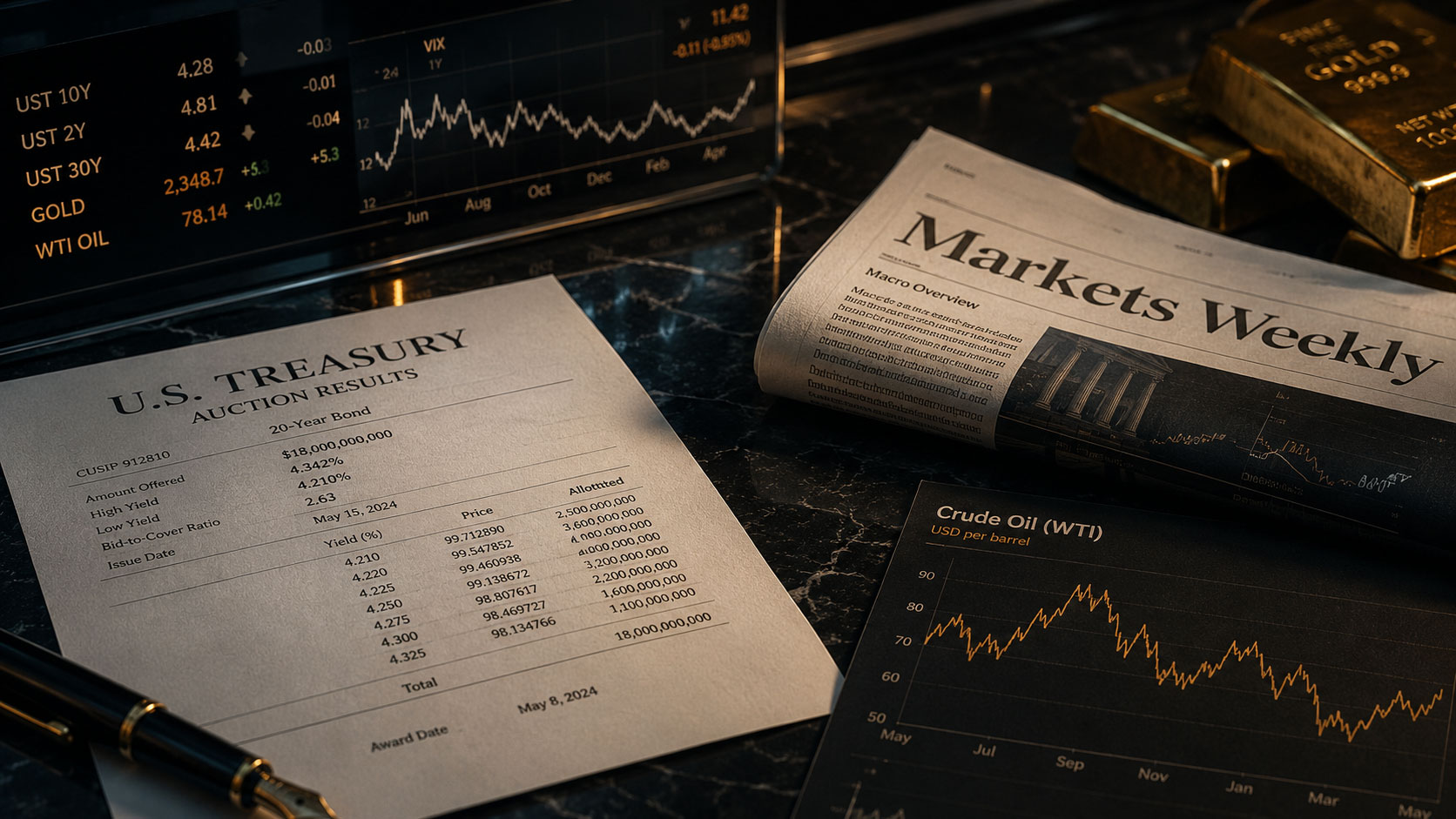
- S&P 500 closed at 7,711.76, rising 37.39 points, or 0.49%, for the week.
- Russell 1000 closed at 4,201.01, rising 14.57 points, or 0.35%, for the week.
- Russell 2000 closed at 2,972.37, falling 45.50 points, or 1.51%, for the week.
- Russell 3000 closed at 4,383.34, rising 11.80 points, or 0.27%, for the week.
- CBOE (VIX) closed at 43, falling 0.70 points, or 4.63%, for the week.
- Dow Jones closed at 53,559.99, rising 282.98 points, or 0.53%, for the week.
- NASDAQ IXIC closed at 26,402.42, rising 221.96 points, or 0.85%, for the week.
- Bitcoin closed at $77,830.29, falling $504.90, or 0.64%, for the week.
- Ethereum closed at $2,442.54, falling $72.74, or 2.89%, for the week.
- Solana closed at $104.13, rising $10.48, or 11.19%, for the week.
- XRP closed at $1.3832, falling $0.0706, or 4.86%, for the week.
- Gold closed at $4,478.10, falling $146.00, or 3.16%, for the week.
- Silver closed at $66.995, falling $2.471, or 3.56%, for the week.
- WTI Crude Oil closed at $83.40, falling $3.66, or 4.20%, for the week.
- Brent Crude Oil closed at $89.31, falling $5.08, or 5.38%, for the week.
- Warsh’s Jackson Hole speech kept rate hikes in play, lifting two-year Treasury yields to 4.35% as inflation concerns persisted.
- July PCE inflation remained 3.7% year-over-year, with core inflation at 3.3%, reinforcing the Fed’s concern over persistent price pressures.
- US jobless claims fell to 203,000, below expectations, while continuing claims dropped below 1.78 million, signaling limited layoffs.
- US second-quarter GDP held at 1.5%, while private domestic demand grew 4.2%, indicating stronger underlying economic momentum.
- Treasury buybacks helped steady long-term bonds, but persistent fiscal concerns kept investors skeptical that intervention could durably suppress yields.
- Nvidia reported record $96.2 billion quarterly revenue and forecast 70% growth next fiscal year, reinforcing confidence in the AI-driven equity trade.
- Gold and Bitcoin ETFs attracted a record $7 billion over five trading days as fiscal concerns revived the scarcity trade.

Politics Weekly
- Canada retaliated against new US tariffs with levies up to 50% on roughly $20 billion of American goods beginning September 8.
- Washington launched Operation Economic Outcast, sanctioning 60+ Iran-linked targets and threatening penalties against companies trading with Tehran.
- US forces struck Iranian rocket launchers near Hormuz, reigniting Gulf tensions as Tehran threatened retaliation and missiles toward Jordan were intercepted.
- Russia prepared to intensify missile strikes on Kyiv and other Ukrainian targets after Kremlin-linked sources said peace talks had reached dead end.
- Ukraine’s 2027 war-financing gap widened, increasing pressure on European partners as Kyiv’s negotiations with donors over additional funding dragged on.
- Russia tested its military’s readiness for another mass mobilization, though the Kremlin had not yet decided whether to call more recruits.
- The Supreme Court removed a hurdle to Trump’s mail-ballot directive, while fresh litigation kept election rules unsettled ahead of November’s midterms.
Technology Advancements in the week
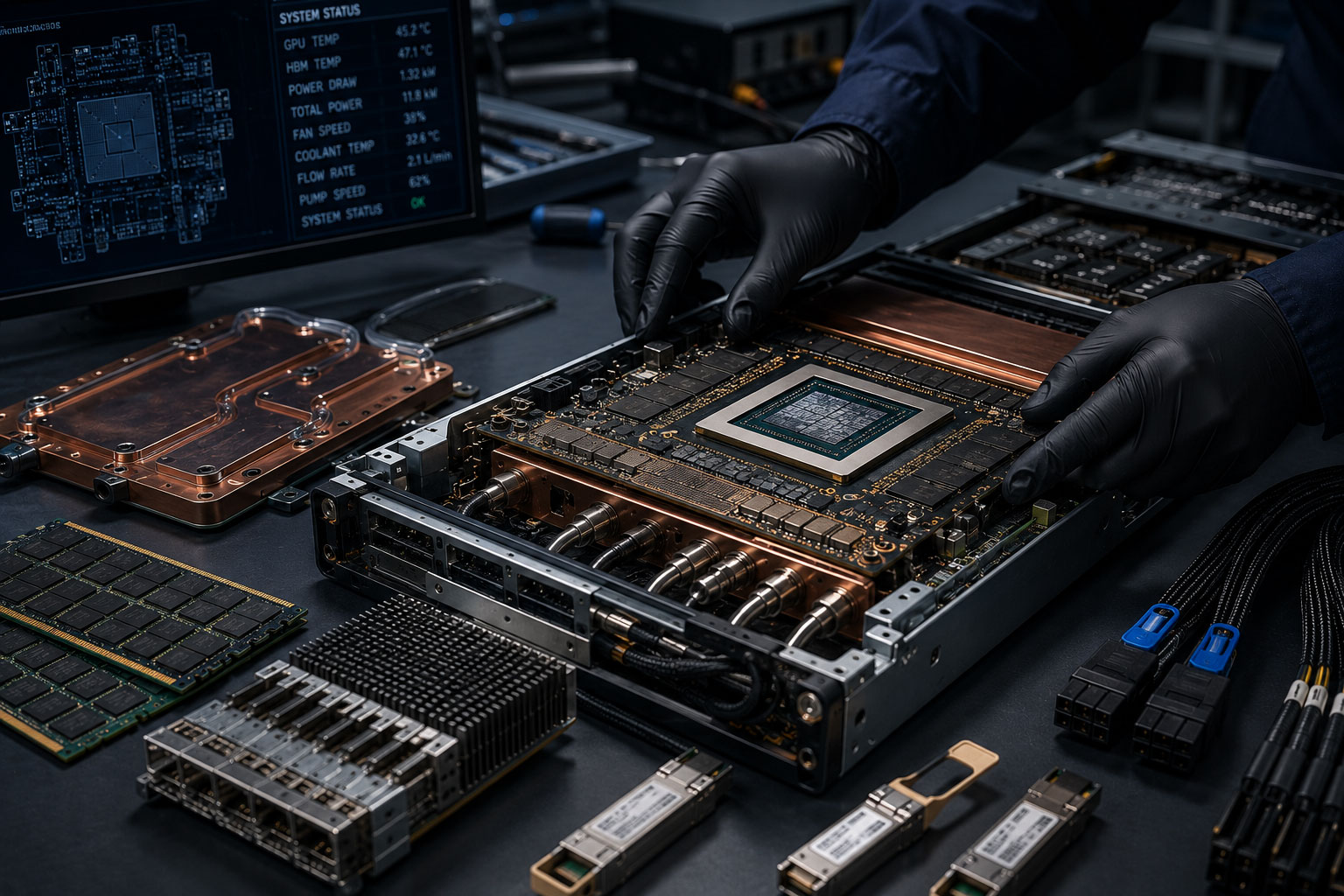
- Amazon agreed to deploy another two million Nvidia GPUs across AWS in 2027–28, underscoring the scale of hyperscaler AI infrastructure spending.
- OpenAI said its Broadcom-built Jalapeño inference chip beat Nvidia’s GB300 in power efficiency and response speed, strengthening its in-house hardware push.
- Nvidia’s supplier commitments reached $279 billion as it raced to secure scarce memory and capacity, increasing its exposure if AI demand slows.
- Nvidia was reportedly nearing a roughly $13 billion acquisition of Hugging Face, expanding deeper into open-source AI software and model distribution.
- Nvidia deepened its robotics push as Chinese companies increasingly adopted its chips and software for humanoid systems and other physical AI applications.
👉Keep the conversation going! Subscribe to our weekly newsletter for more insights, delivered straight to your inbox.