Solar Pre-Sales & Design Guidance
LIDAR shade modelling that de-risks the sale before the plan set
Real engagement, published with the client’s permission.
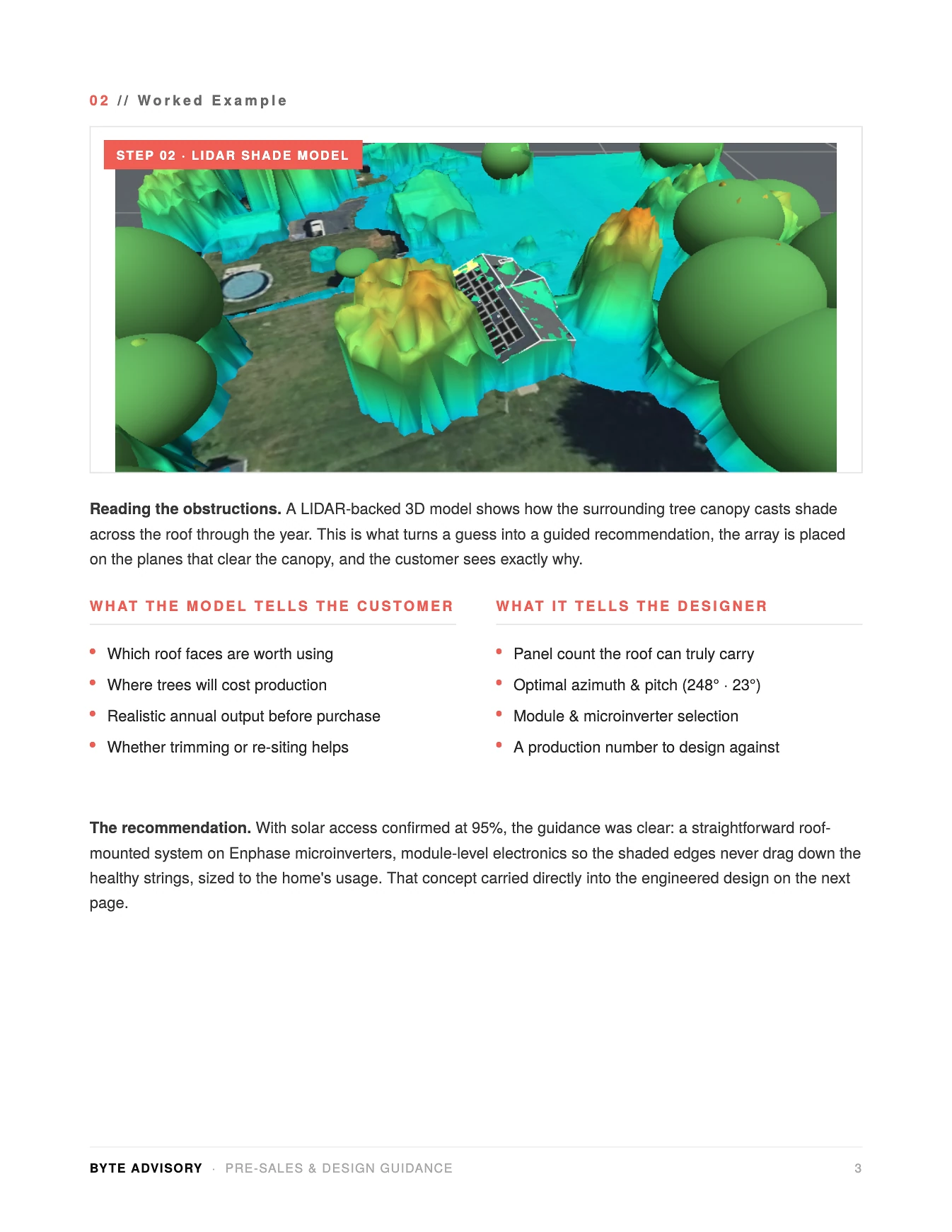
Fig. 01 — LIDAR shade model — reading the obstructions.
- 95% Solar access achieved
- 88% Annual TOF
- 4 Steps, quote to install
Overview
Great solar projects are won and de-risked long before a plan set is drawn. The pre-sales practice guides the customer from the first conversation: satellite and LIDAR site assessment, shade and solar-access scoring in Aurora, right-sizing the system to the home and the bill, and a production estimate that carries straight into the engineered design — so what gets sold is what can actually be built and will actually perform.
The problem
Most solar is sold on a satellite outline and an optimistic production number, then re-cut once an engineer looks at the roof. The customer feels the change as a bait and switch, and the installer absorbs it. The shade has to be understood before anything is promised.
What we did
- Model the site from satellite and LIDAR before a proposal goes out, not after.
- Score solar access and annual TOF per panel in Aurora, so the production figure is defensible rather than indicative.
- Show the customer which roof faces are worth using and whether trimming changes the answer — a guided recommendation, not a guess.
- Carry the approved concept straight into the engineered set, so the sold system and the built system are the same system.
Delivered
- Satellite and LIDAR site assessment
- Shade and solar-access scoring
- System right-sizing against the bill
- Equipment recommendation
- Production estimate and proposal support
Specification
Practices: ESG, Solar & Energy
Industries: Energy & Renewables, Real Estate
Inside the build
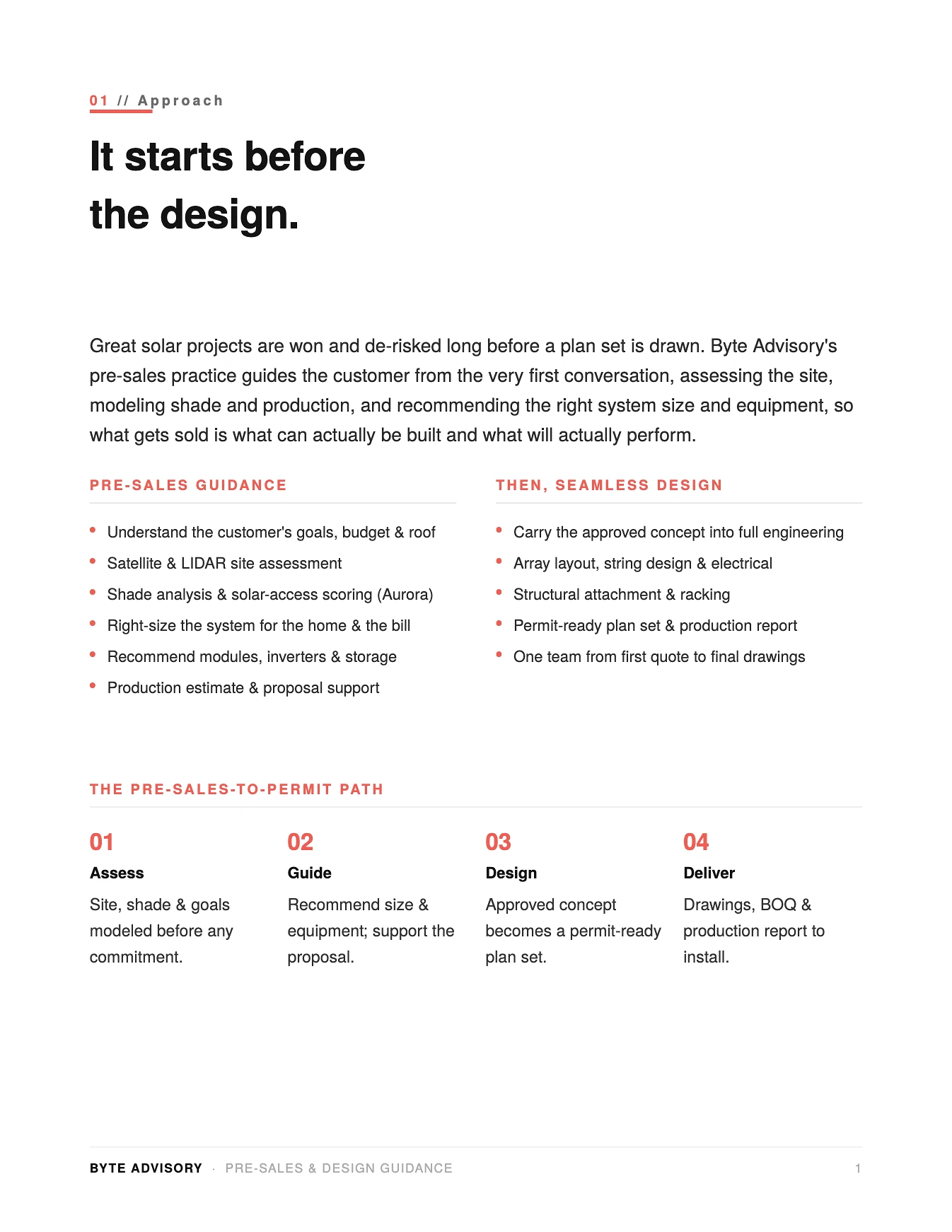
Fig. 02 — The pre-sales-to-permit path.
Have something like this?
Book an intro call with Byte Advisory.
LIDAR shade modelling that de-risks the sale before the plan set